 EN


How Do You Choose Bath Towel Sets Wholesale for Hotel Projects?
2026/11/19
A hotel buyer's guide to bath towel sets wholesale. Covers set composition, GSM tiers, GB/T 22800-2023 checks, colorfastness, shrinkage, and cost per use.
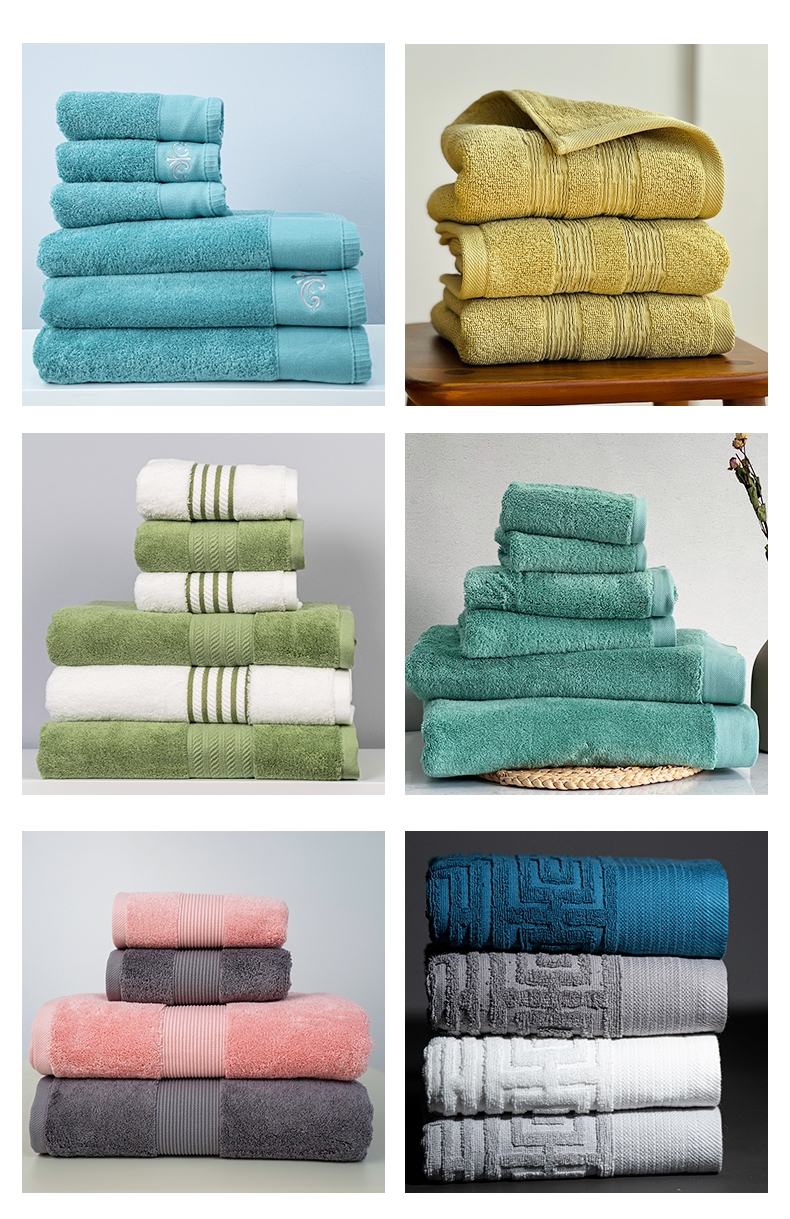
A yarn-dyed bath towel can match hotel towel colour standards, and in some ways it matches them more durably than a piece-dyed towel ever will. But the match is not automatic, and the failure mode is different from what most buyers expect. Piece-dyed towels tend to drift from lot to lot because the fabric is coloured after weaving. Yarn-dyed towels lock the hue into the yarn before the loom ever runs, which gives the colour a structural head start. The catch sits upstream: the yarn itself has to be dyed within a tight shade band, and that band has to hold across every yarn lot feeding the order. When a hotel programme specifies a Pantone TCX reference and a Delta E tolerance, the question is not whether yarn dyeing is capable of hitting it. It is whether the mill controls the yarn supply tightly enough to hit it again six months later.
Hotel towel colour standards are not a single document. They are a procurement language built from a Pantone TCX reference, an approved lab dip, and a shade tolerance expressed as Delta E. In hospitality sourcing, Delta E ≤ 1.5 against the approved dip is a common working tolerance, and ±2 Pantone shade steps is frequently cited as the acceptable band for linen programmes. For brand-critical colours, Delta E under 2 is treated as the line between a controlled shade and a visible drift, while 2 to 4 becomes noticeable to a trained eye and anything above 4 reads as a different colour to most people.
That tolerance only means something when the evaluation light is fixed. D65 illumination is the reference condition for comparing shade lots, because a towel that looks matched under warm hotel room lighting can separate badly under daylight. A supplier quoting a Delta E number without naming the light source and the reference dip is quoting half a standard. The other half is the test method behind the colourfastness claim. ISO 105-C06 for washing, ISO 105-B02 for light, and ISO 105-X12 for rubbing are the usual reference points, with Grade 4 to 5 as the floor for hospitality-grade coloured towels.
The reason a yarn-dyed bath towel holds a hotel colour longer comes down to where the dye sits. Yarn dyeing colours the cotton before weaving, so the dye penetrates at the fibre level rather than sitting near the surface of a finished fabric. That matters under commercial laundering, where towels meet hot water, alkaline detergents, and chlorine bleach on a cycle that repeats far more often than home washing. A surface-dyed towel can look correct on day one and still lose depth at the pile tips after a few months of hotel turnover.
Dye class matters as much as the dyeing stage. Reactive dyes bond covalently with cellulose and handle repeated hot washing well, which is why they are the default for cotton terry. Vat dyes go further on oxidative resistance and are specified when a hotel colour has to survive chlorine bleach without going patchy. A mill that cannot name the dye class for a given colourway is not giving the buyer a fastness story, only a colour recipe.
The honest limitation of yarn dyeing is not fastness. It is shade continuity across yarn lots. Yarn-dyed colour homogeneity is strong within a batch, but the batch size is finite, and each yarn dye lot carries its own shade history. A hotel group rolling out the same sage or navy across multiple properties can end up with two yarn lots that passed the same Delta E check against the standard but sit at opposite edges of the tolerance. Put towels from both lots in the same bathroom and the difference becomes visible under D65 light even though neither lot technically failed.
There is a second, quieter failure point: the yarn source itself. If a mill buys grey yarn on the open market, the residual wax or pectin content can shift between spinning lots, and that changes how much dye the fibre accepts before weaving even begins. Mills that spin their own yarn compress the sampling-to-bulk cycle and keep repeat-order shade variation inside tolerance because the input is controlled at the source. This is why a yarn-dyed towel programme is only as stable as the yarn supply behind it.
| Criterion | Yarn-dyed bath towel | Piece-dyed bath towel |
|---|---|---|
| Where colour enters | On the yarn, before weaving | On the woven fabric |
| Colour fastness depth | Fibre-level penetration, strong under repeated laundering | Surface-level penetration, adequate for lighter service |
| Shade consistency within a lot | High | Depends on dyehouse process control |
| Shade continuity across reorders | Controlled by yarn lot management | Common drift point between dye batches |
| Pattern and border capability | Woven stripes, jacquard borders, logos | Solid shades only, pattern by pile structure |
| Chlorine bleach resistance | Strongest with vat-dyed colourways | Reactive shades can shift under aggressive bleach |
| Setup cost and minimums | Higher, per colour per yarn lot | Lower per shade at volume |
The table points to a practical split. For a solid-colour programme with fast style turns and a tight budget, piece dyeing can meet a hotel colour standard on the first order. For a property that will reorder the same colourway quarterly and expects the bathroom towel set to read as one shade across a decade of laundering, the yarn-dyed route gives the colour a better chance of staying inside tolerance.
A hotel group renovating three properties once approved a single yarn-dyed terry colour against a Pantone TCX chip. The first property received towels from one yarn lot and passed the walkthrough. The second property received a later yarn lot, and housekeeping flagged that the bath towels read slightly cooler than the hand towels in the same room set. Both lots were within Delta E 1.5 of the approved dip. The problem was that they sat at opposite ends of that tolerance, and the room set mixed them. The fix was not a new colour. It was a tighter internal shade band and a rule that one property receives one yarn lot for the full room set.
That story is the reason a workable sourcing check goes past the lab dip. Ask for the Delta E value against the approved standard under D65, not just a pass or fail. Ask whether the mill spins its own yarn or buys grey yarn, because that answer predicts repeat-order shade stability. Ask for the dye class per colourway in writing. Then require a lot-to-lot comparison on production towels, not a single swatch, before the container ships.
Mofisi, a Jiangsu-based weaving manufacturer working in yarn-dyed, jacquard, and embroidered towels since 2004, runs yarn-dyed terry programmes with in-house craft control across the colour-to-finishing flow, which is where the shade band either holds or breaks. For a hotel buyer, the useful advantage is not a promise of perfect colour. It is the ability to trace a finished towel back to the yarn lot and dye class behind it, so a repeat order can be checked against the same reference instead of a colour name on a purchase order.
2026/11/19
A hotel buyer's guide to bath towel sets wholesale. Covers set composition, GSM tiers, GB/T 22800-2023 checks, colorfastness, shrinkage, and cost per use.
2026/11/19
Build a reliable hotel towel wholesale supply chain. Covers GB/T 22800-2023, verification protocols, contracts, and wash-cycle validation.
2026/11/19
Six common mistakes in hotel towels wholesale procurement. Covers cost-per-use, GSM verification, wash testing, sample sealing, colorfastness, and contract terms.
2026/11/19
Guide to certifications for hotel towels wholesale. Covers OEKO-TEX, GOTS, OCS, BSCI, SMETA, ISO standards, and regional compliance requirements.
2026/11/19
Guide to bath towel sets wholesale for hotels. Covers GSM, cotton grades, yarn count, loop height, and supplier wash-test verification.
2026/11/19
Learn how to specify stitch density for custom embroidered bathrobes. This guide covers SPI, stabilizers, and digitizing to prevent fabric stiffness in hotel robes.
