 EN

How Do You Choose Bath Towel Sets Wholesale for Hotel Projects?
2026/11/19
A hotel buyer's guide to bath towel sets wholesale. Covers set composition, GSM tiers, GB/T 22800-2023 checks, colorfastness, shrinkage, and cost per use.
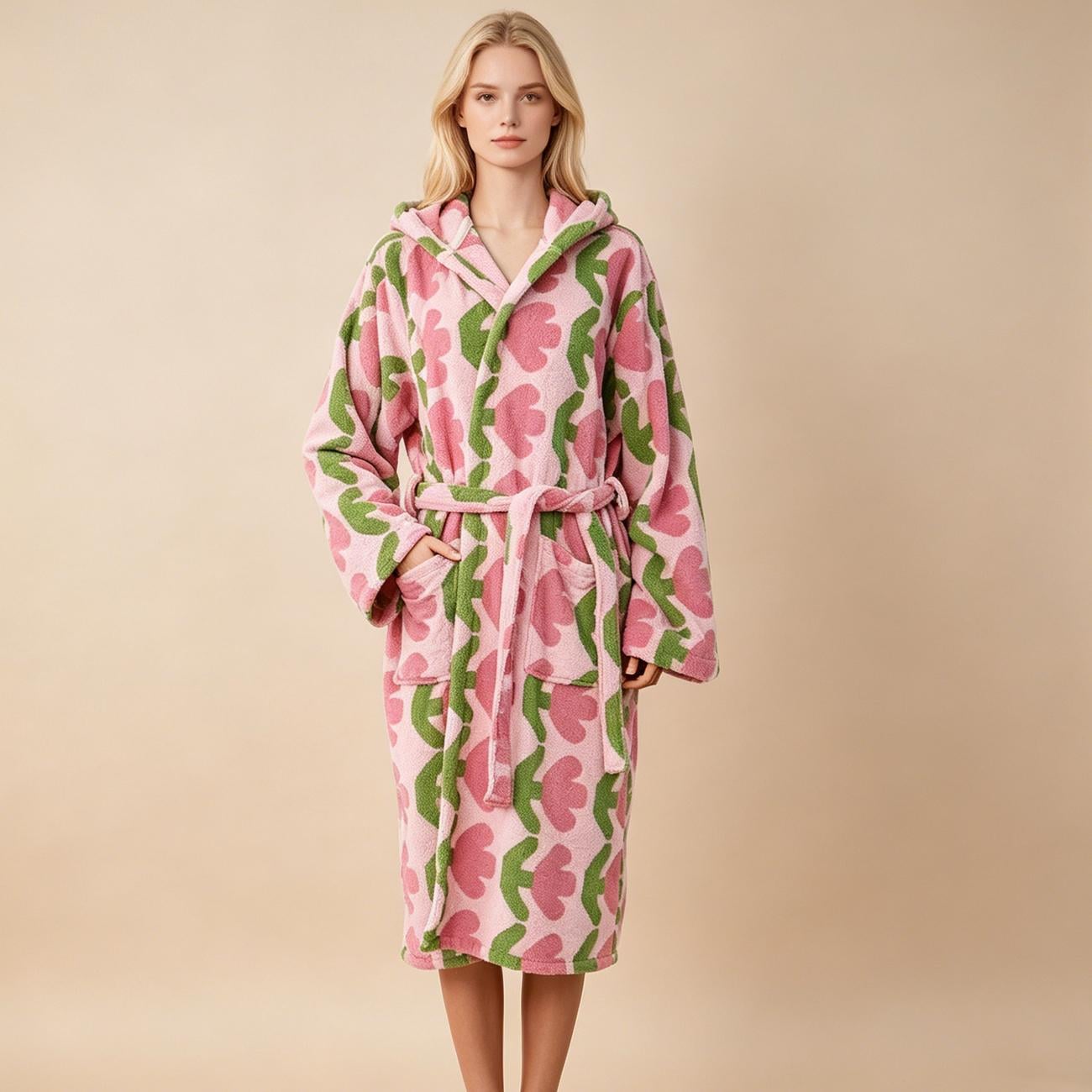
Walk through any hospitality textile trade show and count how many bathrobe spec sheets carry the phrase “OEKO-TEX approved.” Then count how many actually name the product class. The gap between those two numbers tells you most of what you need to know about certification theater in the hotel supply chain. A cotton bathrobe is not a curtain. It is not a jacket. It spends thirty minutes or more pressed against bare skin, often right after a shower, when pores are open and the skin barrier is at its most permeable. That use case sits inside a very specific tier of OEKO-TEX Standard 100, and a manufacturer that cannot or will not specify which tier its certificate covers is telling a procurement team something important, even if it is not saying it out loud.
OEKO-TEX Standard 100 splits certified textiles into four product classes based on skin contact intensity. Class I covers baby articles up to age three. Class II is the bucket for products with direct, prolonged, large-area skin contact, which is exactly where terry bathrobes land, alongside underwear and bed linens. Class III is for outerwear with minimal contact. Class IV is decoration. The limit values tighten as you move toward Class I, and they loosen as you move toward Class IV.
A robe carrying a Class III certificate has technically passed a lower bar than the product’s actual use case demands. That does not automatically make the robe unsafe. It means the testing was not calibrated to the way the product is worn. For a hotel, that is an avoidable blind spot. Ask for the certificate number, check the class printed on it, and confirm it matches the garment’s end use. A manufacturer that holds Class II certification for bathrobes has already done the harder work.
OEKO-TEX does not freeze its standards. The 2026 update added bisphenol B, F, and AF at 200 mg/kg for Standard 100 textiles, tightened para-Anisidine to 20 mg/kg as a suspected carcinogen tied to azo dye breakdown, and restricted triphenyl phosphate at 500 mg/kg for textile certifications. For Class I items, some of those new limits drop to 0.5 mg/kg. A bathrobe is Class II, not Class I, but the direction is unmistakable: the testing scope is widening, and the substances under scrutiny are the ones that show up in finishing chemistry, dye carriers, and plasticizers.
The PFAS exception rule adds another layer. Water-repellent and stain-resistant finishes often involve fluorine chemistry, and a product can fail a total fluorine screen without containing regulated PFAS. The certificate holder can request additional verification, but only if it can document the non-PFAS fluorine source and pay for the extra testing. A hotel bathrobe rarely needs stain-resistant finishing, but if a supplier offers one, the buyer needs to know whether the certificate still holds after that finish is applied.
The operational change with the longest reach is supply chain traceability. Starting with renewals after June 2027, Standard 100 will only accept upstream certificates from first-tier suppliers, not second-tier mills further back in the chain. Wet processes like dyeing, washing, printing, and finishing will each need their own certification at renewal. A bathrobe manufacturer that has mapped its dye house and finishing partners, and holds current certificates for those steps, is not just compliant today. It is less likely to hand a hotel a certificate problem eighteen months from now.
Buyers love a GSM number because it is easy to compare. A 450 GSM terry velour robe sounds more substantial than a 380 GSM robe, and in some ways it is. But GSM tells you weight, not chemical safety, and the two specifications sit on different axes.
| Fabric type | Typical GSM range | Best-fit setting | OEKO-TEX class the product should carry |
|---|---|---|---|
| Cotton terry | 350–450 | Standard full-service rooms | Class II |
| Terry velour | 400–550 | Upscale rooms, suites | Class II |
| Waffle weave | 220–360 | Spas, warm climates, quick-dry needs | Class II |
| Microfiber | 300–360 | Gym and budget segments | Class II if worn against skin |
The table is deliberately narrow. A waffle robe at 260 GSM can be perfectly appropriate for a spa in a hot climate, and a 550 GSM terry velour robe can be wrong for a property whose laundry runs high-temperature cycles that accelerate fiber degradation. The point is that GSM and certification class answer different questions. A manufacturer that can talk intelligently about both is more useful than one that leads with a single number.
A hospitality group operating fourteen upper-midscale and boutique properties across three states learned this the hard way. Decentralized buying had produced a specification mess: sheet sets in the same brand family varied in weave and finish, towels differed in GSM property to property, and nobody could say what the group actually specified because no group specification existed.
When the group finally moved to a consolidated sourcing program, the vetting process did not stop at collecting OEKO-TEX logos. The sourcing team audited mills on site, verified registration and ownership, assessed weaving and finishing capability against a written specification, and checked Oeko-Tex documentation for scope and validity rather than accepting a logo on a quotation. Then came the step that separates serious buyers from catalog shoppers: shortlisted linens went through simulated commercial laundry cycles at the specified wash chemistry and temperature, and were assessed for shrinkage, tensile strength, pilling, and whiteness retention. Two attractive-looking candidates were rejected at that stage before a single bulk order was placed.
The outcome was not a cheaper product. Validated linens survived roughly 30% more commercial wash cycles before retirement, and cost per occupied room for textiles fell about 17% once consolidated freight and direct factory pricing were factored in. The lesson applies directly to bathrobes: a certificate proves a minimum chemical safety standard, but it does not prove that the robe will survive the laundry. The manufacturer’s file should connect the certificate to the actual production run, not just to a sample sent to a lab.
A hotel buyer does not need to become an OEKO-TEX auditor. A short list of questions gets most of the way there. Which product class is on the certificate for the specific robe being quoted? Does the certificate cover the exact fabric composition and finish, or only a base fabric that then gets a different treatment? For renewals after mid-2027, has the manufacturer mapped its dye house, printer, and finisher, and do those wet processes hold their own certifications? If the robe carries a stain-resistant or water-repellent finish, has that finish been tested under the current PFAS rules?
These are not gotcha questions. They are the same questions a competent manufacturer should be able to answer without scrambling, because the answers live in the same documentation system that supports the certificate. A factory that has been producing for export hospitality buyers for two decades tends to have this paper trail already organized, not because a customer asked, but because the compliance bar in its core markets demanded it.
Jiangsu Mofisi Weaving has operated its Huai'an facility since 2004, runs more than 25,000 m² of production space, and holds OEKO-TEX Standard 100 certification for towels, bathrobes, and baby articles alongside ISO 9001 and ISO 14001. The certificate covers the product categories a hotel actually buys, not a single hero SKU. For a procurement team that has been burned by certificates that turn out to be narrower than the quotation implied, that alignment between scope and supply is the part worth verifying first.
2026/11/19
A hotel buyer's guide to bath towel sets wholesale. Covers set composition, GSM tiers, GB/T 22800-2023 checks, colorfastness, shrinkage, and cost per use.
2026/11/19
Build a reliable hotel towel wholesale supply chain. Covers GB/T 22800-2023, verification protocols, contracts, and wash-cycle validation.
2026/11/19
Six common mistakes in hotel towels wholesale procurement. Covers cost-per-use, GSM verification, wash testing, sample sealing, colorfastness, and contract terms.
2026/11/19
Guide to certifications for hotel towels wholesale. Covers OEKO-TEX, GOTS, OCS, BSCI, SMETA, ISO standards, and regional compliance requirements.
2026/11/19
Guide to bath towel sets wholesale for hotels. Covers GSM, cotton grades, yarn count, loop height, and supplier wash-test verification.
2026/11/19
Learn how to specify stitch density for custom embroidered bathrobes. This guide covers SPI, stabilizers, and digitizing to prevent fabric stiffness in hotel robes.
